

AI-modified image

Marking & Labeling

Marking Plastics

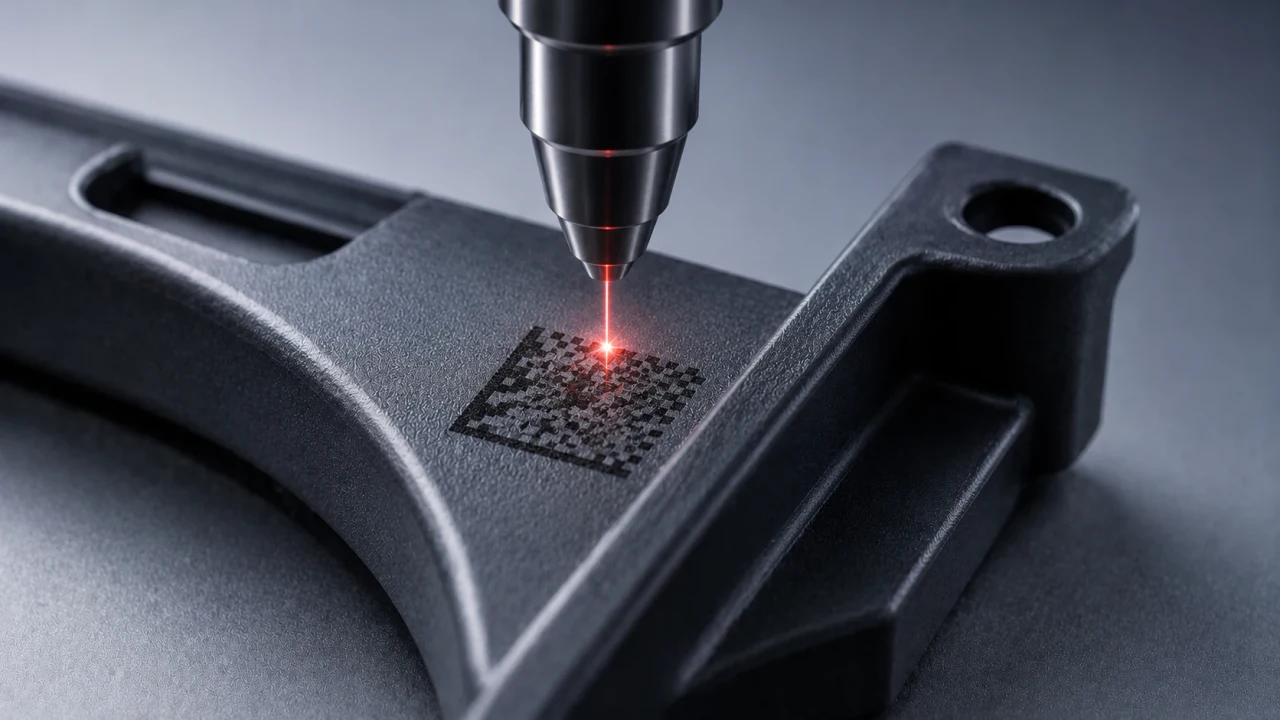
Fine codes, clear lettering and permanent identification: Futonics thulium fiber lasers combine high beam quality and controlled energy delivery for contact-free marking and engraving of suitable plastics, without inks or labels.

Discuss your application

Permanent marking without inks or labels

Laser marking creates product information directly on the component without inks, labels or mechanical engraving tools.

High beam quality supports fine details and small marking fields for serial numbers, codes, logos, symbols and technical information.

The advantages of thulium fiber lasers for plastic marking

The interaction depends on polymer type, pigmentation, additives and process parameters. Precise energy delivery enables marking, engraving or surface structuring with controlled contrast.

Contact-free processing is particularly useful for small parts, complex geometries and areas that are difficult to reach with conventional tools.

Direct marking for traceability and product identification

Plastic components can carry serial and batch numbers, Data Matrix codes, QR codes, scales, logos and technical symbols directly on their surface. Fine beam focusing is relevant where the marking area is small or the component geometry makes access difficult. Applications include electrical parts, automotive components, tool handles, switches and keyboards.

Unlike labels or printed markings, direct laser marking does not require ink or adhesive labels. It also avoids contact with a mechanical engraving tool. The achievable contrast and detail depend on the polymer, pigmentation, additives and surface structure.

Scanner-based engraving of plastic surfaces

With a scanner system, our lasers can engrave plastic surfaces, including black PMMA as shown in the gallery. The scanner guides the beam over the marking pattern, while controlled energy delivery produces the desired surface structure. These examples complement marking of transparent, colored and opaque technical plastics.

A process intended for industrial series production must be evaluated against the actual material and marking geometry. A legible code, a fine scale and a decorative engraving can demand different contrast and surface results, even when they are produced on the same type of component.

Evaluating your plastic marking process

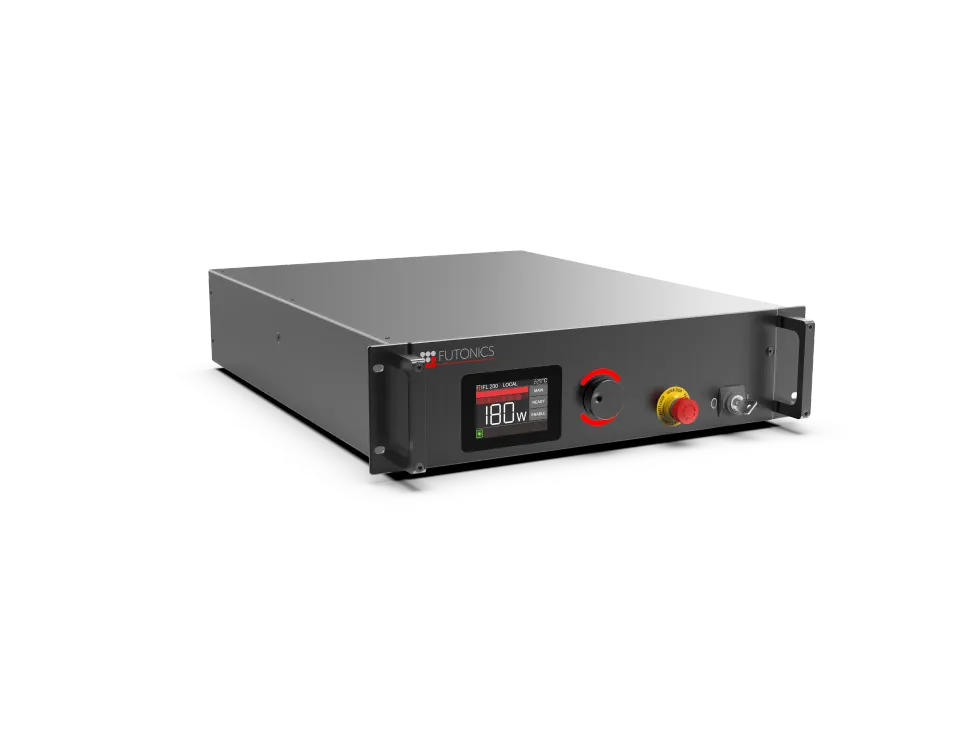
Suitability depends on material, pigmentation, additives, surface structure, desired contrast and marking geometry. Futonics supports application evaluation and selection of a suitable laser module.

Advantages

Suitable applications

Marking plastic

Recommended Laser Systems

Futonics Laser

Technical consulting for your application

Whether a 2 µm thulium fiber laser is suitable depends on material, geometry and process requirements. Contact Futonics to discuss your application.

Discuss your application

Necessary storage enables essential website functions. With your permission, analytics helps us understand website use and marketing measures advertising performance. Optional categories stay off until you agree.

Always active. Includes storing your privacy choice.

Allows statistical analysis of website use.

Allows advertising measurement and personalization.

Privacy Policy