

AI-modified image

Agriculture

Laser Weeding

Target weeds precisely without herbicides. Futonics thulium fiber lasers combine absorption in water-rich plant tissue around 2 µm with high beam quality and tightly focused power for selective thermal treatment in agricultural robots and OEM systems.

Discuss your application

Selective weed control without herbicides

Laser weeding applies energy selectively to individual weeds or growth centers without mechanically disturbing the soil and without chemical herbicides.

High beam quality enables small focus spots and high power density, supporting fast local treatment in precision-agriculture systems.

The advantages of 2 µm lasers for laser weeding

Plant tissue contains substantial water, and 2 µm radiation is more strongly absorbed by water-rich tissue than many shorter infrared wavelengths, supporting locally confined thermal treatment.

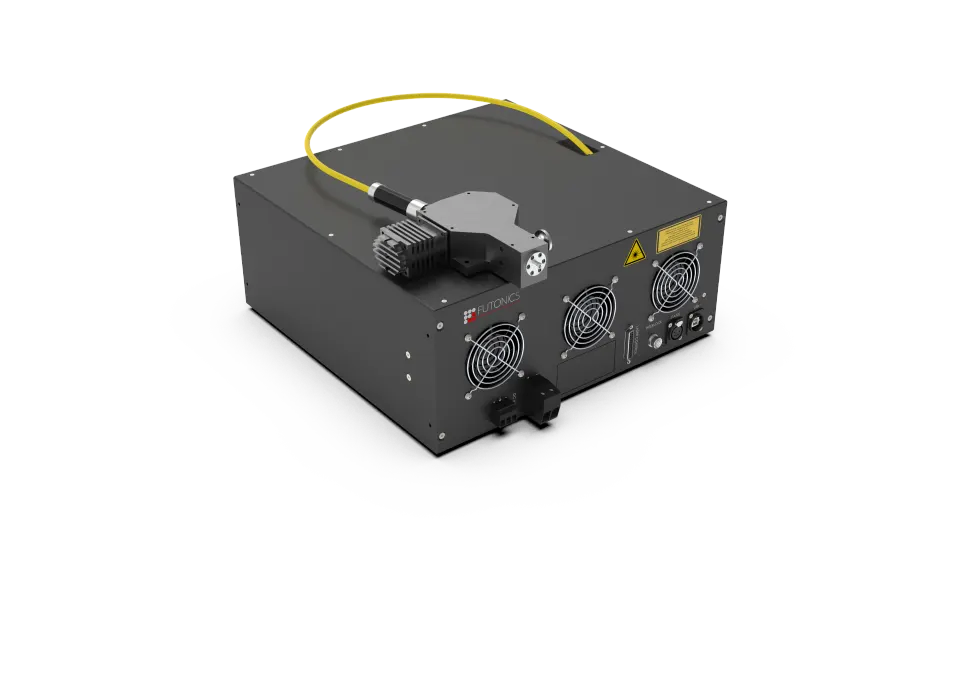
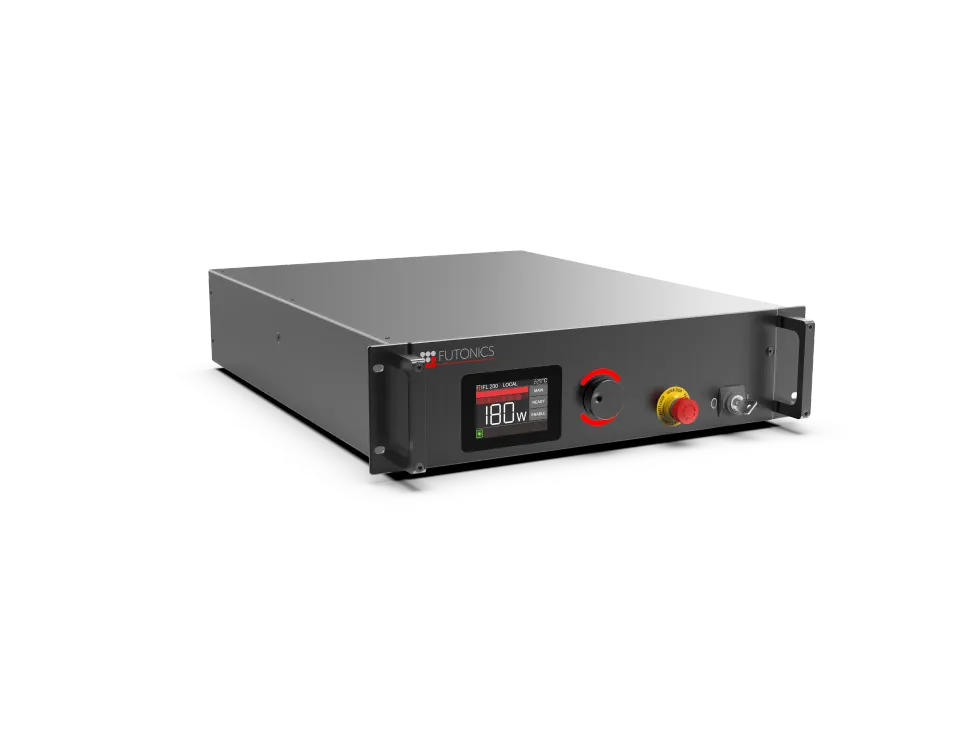
Futonics offers high-power CW and QCW platforms with excellent beam quality for integration into scanners, mobile agricultural robots and OEM machinery.

Wavelength, focus and interaction with plant material

Laser weeding requires both a suitable wavelength and sufficient power density at the plant. Water-rich tissue absorbs 2 µm radiation more strongly than radiation at 1 µm. When comparing laser sources, the achievable focus, available power and optical-system requirements also matter, including for CO₂, 1.5 µm and UV alternatives.

These comparisons concern the complete processing task: wavelength alone does not determine treatment speed. The beam must be focused onto a small target area such as a growth center, and the energy delivery must match the plant and working distance.

Integration into selective agricultural robots

A laser-weeding system combines plant detection with targeted treatment. The laser source supplies the energy, while the detection and scanner system determine where it is delivered. Selective treatment of unwanted plants is intended to spare crops and avoid mechanical soil disturbance.

Our lasers can be integrated into mobile agricultural robots and OEM machinery for vegetable production, specialty crops and row crops. Working distance, spot size, required power density and vehicle speed are linked integration requirements. Selecting a CW or QCW source therefore belongs to the overall robotic and scanning concept.

Evaluating a laser-weeding system

Suitability depends on target plant, working distance, scanner system, spot size, required power density, travel speed and integration concept. Futonics supports evaluation and selection of a suitable CW or QCW laser module.

Advantages

Suitable applications

Laser weeding 1

Recommended Laser Systems

Futonics Laser

Technical consulting for your application

Whether a 2 µm thulium fiber laser is suitable depends on material, geometry and process requirements. Contact Futonics to discuss your application.

Discuss your application

Necessary storage enables essential website functions. With your permission, analytics helps us understand website use and marketing measures advertising performance. Optional categories stay off until you agree.

Always active. Includes storing your privacy choice.

Allows statistical analysis of website use.

Allows advertising measurement and personalization.

Privacy Policy