

AI-modified image

Industrial Plastic Processing

Microfluidic Welding

Fine weld seams, clear optical paths and locally confined heat input: Futonics thulium fiber lasers combine single-mode beam quality with absorption around 2 µm for precise joining of suitable microfluidic polymer components without absorbing additives.

Discuss your application

Fine weld seams for sensitive microfluidic structures

Many transparent polymers, including PMMA and PC, absorb sufficiently around 2 µm to be joined without absorbing coatings, pigments or additives.

With single-mode beam quality and scanner-based processing, very narrow and reproducible weld seams can be created while keeping the heat input locally confined.

The advantages of 2 µm lasers for microfluidic welding

Futonics thulium fiber lasers provide single-mode beam quality with M² < 1.1. In combination with a suitable scanner system, weld seam widths down to about 50 µm can be achieved.

Controlled energy delivery helps protect microchannels, cavities and other functional structures from unnecessary thermal influence while maintaining optical transparency and low-contamination joining.

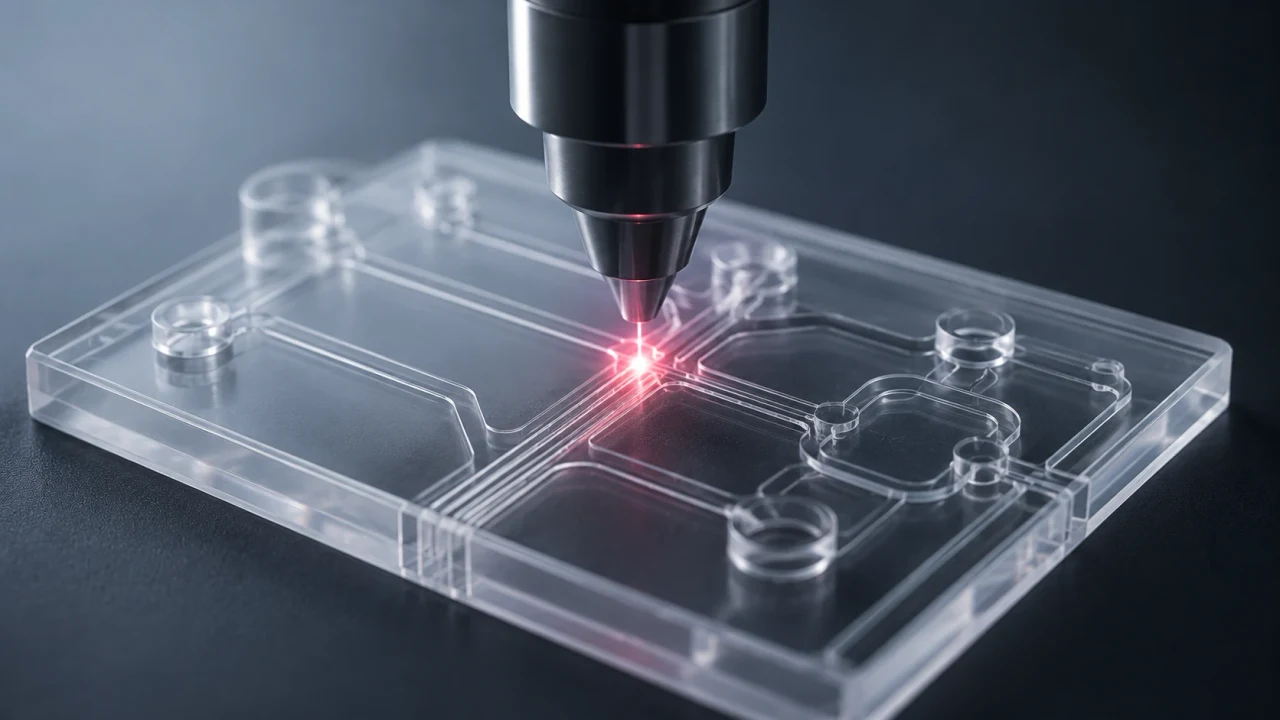
Microfluidic polymer structure being welded with a focused laser beam.

Transmission welding of PMMA and PC

Microfluidic welding joins polymer components while preserving small channels, cavities and functional structures. Our lasers support transmission welding of transparent and non-transparent components, with PMMA and PC among the transparent materials that can provide sufficient intrinsic absorption around 2 µm. For suitable materials, an absorbing coating or added pigment is therefore unnecessary.

This is relevant when the finished component must retain optical transparency and clean joining surfaces. Local energy delivery allows the seam to be placed around functional structures while limiting unnecessary heat input into the surrounding polymer.

Scanner processing for diagnostic and analytical components

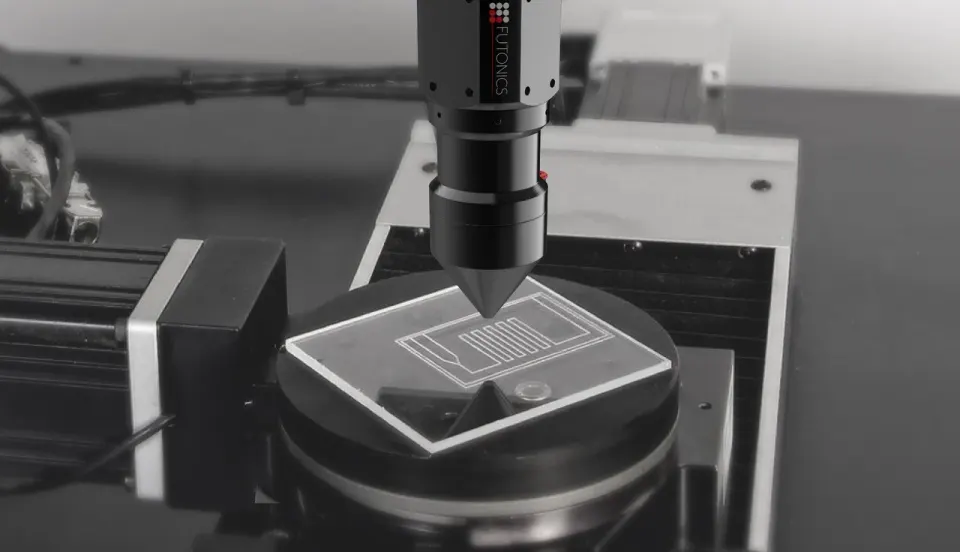
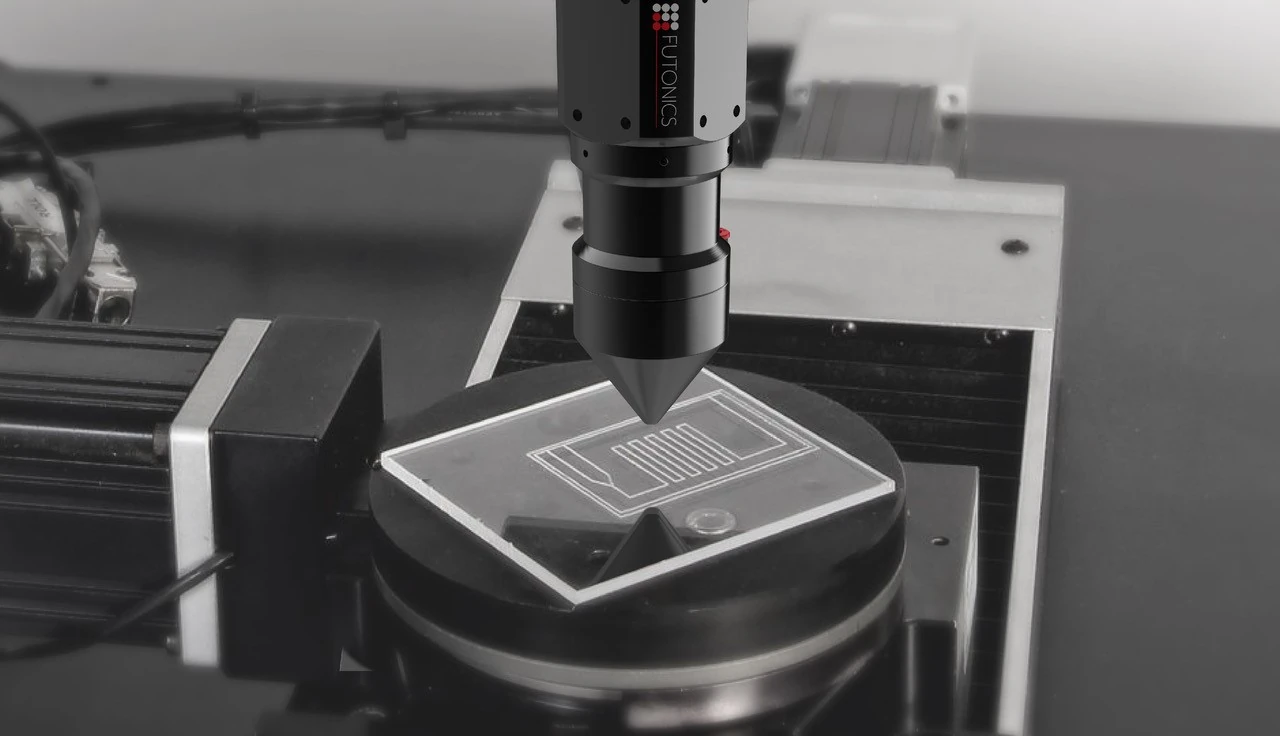
A scanner system guides the focused beam along the selected weld contour. The narrow seams produced with our lasers are relevant to lab-on-a-chip devices, diagnostic test systems and microfluidic cartridges, where joining geometry and functional geometry are closely connected.

Other applications include medical disposable components, analytical platforms and industrial sensors. For each component, the material, wall thickness and seam design determine whether the proposed process is suitable. Laboratory evaluation and industrial or OEM integration should therefore be considered as parts of the same joining task.

Evaluating your microfluidic welding process

Suitability depends on polymer type, geometry, wall thickness, weld seam design and process requirements. Futonics supports application evaluation and selection of a suitable laser module for laboratory, industrial or OEM systems.

Advantages

Suitable applications

Welded microfluidic polymer structure

Recommended Laser Systems

Futonics Laser

Technical consulting for your application

Whether a 2 µm thulium fiber laser is suitable depends on material, geometry and process requirements. Contact Futonics to discuss your application.

Discuss your application

Necessary storage enables essential website functions. With your permission, analytics helps us understand website use and marketing measures advertising performance. Optional categories stay off until you agree.

Always active. Includes storing your privacy choice.

Allows statistical analysis of website use.

Allows advertising measurement and personalization.

Privacy Policy